
Sprouts
Carl Jung's Theory on Introverts, Extraverts, and Ambiverts 荣格的人格理论
Learn more about Carl Jung’s Theory on Introverts, Extraverts, and Ambiverts. 了解更多关于卡尔·荣格关于内向者、外向者和中向型人格的理论。
关于本资源 About This Resource
Sprouts制作有关心理学、教育学和儿童发展的教育视频。这些动画短片旨在启发和拓展你在这些领域的知识。
Sprouts makes educational videos about psychology, pedagogy and child development. The short animated videos are aimed to inspire and broaden your knowledge with these areas.
资源重点 Resource Focus:
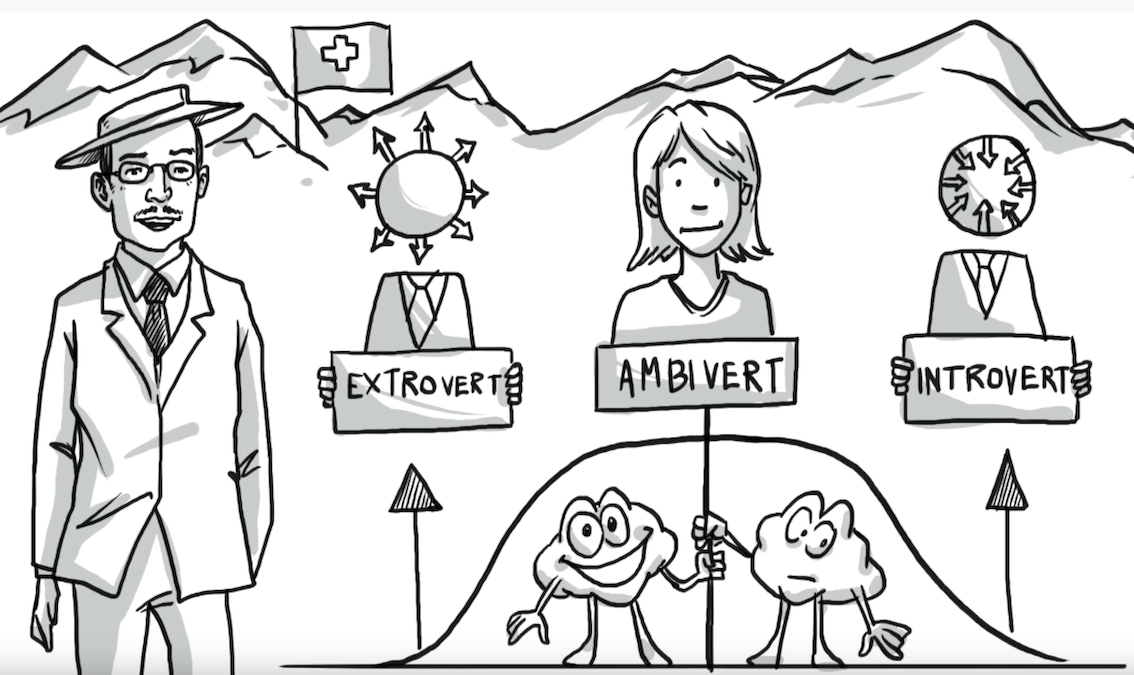
“内向”和“外向”是心理学家卡尔 ·荣格在20世纪20年代首次创造的术语。根据荣格的研究, 外向者寻求与外界的密切接触,而内向者则把心理能量深藏于内心。荣格认为没有人是完全外向或内向的,相反, 人们同时具备这两种性格特征。但是, 大多数人不是偏向于这一方,就是偏向于另一方。如果这两种性格同时存在,即可说这个人拥有中向型人格。
Introversion and extroversion (or extraversion) are terms first coined by psychiatrist Carl Gustav Jung in Switzerland of the 1920s. According to Jung, an extrovert seeks intensive contact with the outside world. An introvert instead turns the psychic energy inwards. Jung believed that no one is 100% extravert or 100% introvert instead we carry both traits. However, most minds tend to lean either on one side or the other. If both characteristics are equally present, we can speak of someone who has an ambivert personality.